
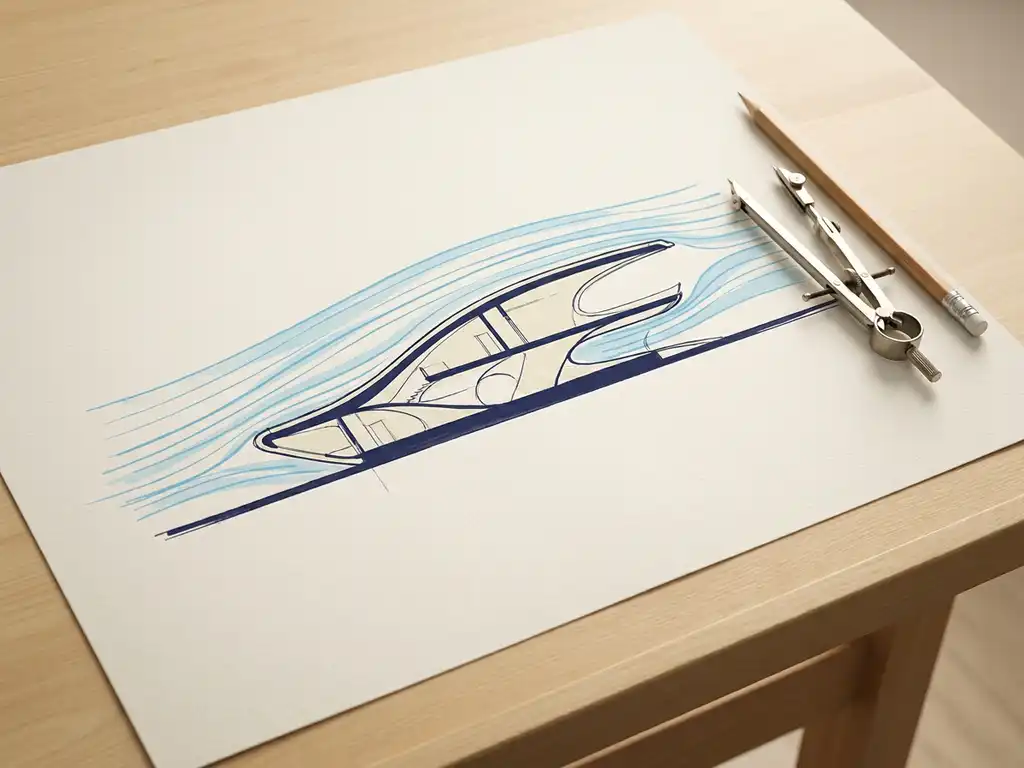
Both wind tunnel testing and CFD (Computational Fluid Dynamics) simulation are reliable methods for studying how wind behaves around buildings and structures. The key difference is that a wind tunnel uses a physical scale model in a controlled airflow environment, while CFD runs the same analysis entirely on a computer. For most modern projects, CFD is faster, more flexible, and better suited to complex or large-scale studies, though wind tunnels remain the preferred choice for certain regulatory and structural applications.
The right method depends on your project type, the regulatory requirements you need to meet, and how early you are in the design process. The questions below cover everything you need to know to make that call.
Which method produces more accurate results: wind tunnel or CFD?
Neither method is universally more accurate. Both wind tunnel testing and CFD produce reliable results when applied correctly, and both have been validated against real-world measurements. The accuracy of either method depends far more on the quality of the inputs, the skill of the team running the analysis, and whether the method is appropriate for the project at hand.
Wind tunnels have a long track record and are often seen as the reference standard, particularly for facade pressure and structural load testing. A physical model in a controlled airstream produces measurable, repeatable data that is straightforward to validate.
CFD, when run with validated algorithms and the right turbulence models, produces results that are comparable in quality. In our own work, we use internally developed and validated CFD algorithms alongside OpenFOAM with an SST k-omega turbulence model, which gives us confidence in the outputs for both individual building assessments and large-scale urban studies. For the Rotterdam pilot study, we worked with a computational mesh of more than 583 million cells, which gives you a sense of the level of detail modern CFD can achieve.
The honest answer is that a well-executed CFD study and a well-executed wind tunnel test will give you comparable conclusions. Where they differ is in scope, speed, and the types of questions each can answer.
What types of projects are best suited to CFD simulation?
CFD simulation is best suited to large-scale, complex, or early-stage projects where flexibility and speed matter. It is the method of choice for city-wide wind assessments, area developments, and any situation where the design is still evolving and you need to test multiple configurations quickly.
Wind tunnels require a physical scale model, which takes time and money to build. If your design changes, you need a new model. CFD does not have that constraint. You can update the geometry, adjust building heights, or test a new facade configuration without starting from scratch.
CFD is also the only practical option for very large study areas. A wind tunnel simply cannot accommodate a domain several kilometres in diameter. When the city of Rotterdam commissioned a wind study covering an area of roughly five kilometres in diameter, CFD was the only feasible approach. The study covered high-rise zones, residential areas, harbours, and parks in a single simulation run, something no physical model could replicate at that scale.
Other project types where CFD excels include pollutant dispersion studies, urban heat stress analysis, and early design-phase quick scans where you want directional insight before committing to a detailed study. If you are working on wind engineering for a new area development or a masterplan, CFD gives you the most useful information at the earliest stage.
When is wind tunnel testing still required or preferred?
Wind tunnel testing is still required or preferred in three main situations: when regulations or permit authorities specifically demand it, when you need highly precise facade pressure data for structural design, and when you are working on a project where a physical model provides clearer evidence for a planning authority or client.
For facade wind loading and cladding design under Eurocode EN 1991-1-4, wind tunnel testing is often the most direct route to the pressure coefficients your structural engineer needs. The physical model produces surface pressure data that is difficult to dispute and straightforward to feed into a structural calculation.
Some municipalities and permit bodies also have a preference for wind tunnel results, particularly for landmark buildings or complex geometries. In those cases, the decision is less about technical accuracy and more about what the authority will accept as evidence.
Wind tunnels also work well for individual high-rise buildings and smaller masterplans where the model is manageable in size and the geometry is relatively stable. If your design is finalised and you need a definitive load assessment, a wind tunnel test is a solid choice.
How do the costs and timelines compare between the two methods?
CFD is generally faster and more cost-effective than wind tunnel testing, particularly for pedestrian wind comfort studies and large-scale assessments. Wind tunnel testing involves physical model construction, which adds both time and cost before the actual testing even begins.
For a typical pedestrian wind comfort study, a CFD assessment can be completed in days to a few weeks, depending on the complexity of the geometry and the number of wind directions tested. A wind tunnel study for the same project requires model fabrication time on top of the testing itself, which typically makes the overall timeline longer.
That said, cost and timeline are not always the deciding factors. If your project requires wind tunnel data for regulatory or structural reasons, the cost comparison becomes less relevant. What matters is getting the right output for the right purpose.
For projects where both methods are technically acceptable, CFD tends to win on speed and flexibility. For time-sensitive projects, the ability to start a CFD study quickly, without waiting for a physical model, can make a real difference to your programme.
Can CFD and wind tunnel testing be used together?
Yes, and for some projects it makes a lot of sense to use both. CFD and wind tunnel testing are complementary rather than competing methods, and combining them can give you a more complete picture than either method alone.
A common approach is to use CFD in the early design phase to explore options and identify potential wind issues, then use a wind tunnel test to validate the final design or produce the structural load data needed for the permit application. This way you get the flexibility of CFD during design and the regulatory weight of wind tunnel results at the end.
CFD results can also be used to validate wind tunnel setups, and wind tunnel data can be used to calibrate CFD models. In research and product development contexts, running both methods and comparing the outputs is a standard quality check. For CFD simulations in building physics, this kind of cross-validation adds confidence to the conclusions, especially on high-stakes projects.
What inputs are needed to start a CFD or wind tunnel study?
To start either type of study, you need a 3D model of the building or area, surrounding context geometry, and meteorological wind data for the site. The more complete and accurate these inputs are, the more reliable the results will be.
For CFD, the typical inputs are:
- 3D geometry: A model of the building and its surroundings, usually within a radius of at least 250 to 500 metres. Geodata sources such as 3DBAG or BRT TOP10NL can fill in the context if you do not have a full site model.
- Meteorological data: Wind rose data for the site, showing wind speed and direction frequency. For projects in the Netherlands, NPR 6097 data (required for NEN 8100 compliance) or DOWA data are the standard sources.
- Design intent: Information about how the space will be used, which areas are most sensitive to wind, and whether the study is for comfort, safety, or structural loading.
For a wind tunnel study, you also need a physical scale model, which requires detailed drawings and sufficient lead time for fabrication. The model needs to represent the building and its immediate surroundings accurately enough to produce meaningful results.
One practical tip: the earlier you share your geometry, the more useful the study will be. Wind issues discovered late in the design process are much harder and more expensive to fix. Getting a quick scan done while the design is still flexible gives you options that a late-stage study simply cannot offer. You can find a broader overview of how we approach these studies on the Actiflow website.
How Actiflow helps with wind tunnel testing and CFD
We work with both CFD and wind tunnel testing, and we help you choose the right method for your specific project, regulatory context, and timeline. With over 21 years of experience in fluid dynamics and deep familiarity with Dutch, Belgian, and UK wind assessment requirements, we know what each permit authority expects and how to deliver results that hold up under scrutiny.
Here is what working with us looks like in practice:
- We advise you on which method, or combination of methods, is appropriate for your project and the applicable norm (NEN 8100, Lawson, Eurocode EN 1991-1-4)
- We run CFD studies using our own validated algorithms and internal HPC cluster, producing colour-coded maps and graphics you can share directly with clients, planners, or permit authorities
- We have our own wind tunnels in the Netherlands and the UK, so we can handle physical testing in-house without relying on third parties
- We cover the full range, from a quick scan in the early design phase to a full pedestrian wind comfort assessment or city-wide wind study
- For regular clients, we set everything aside to start the next day if needed, and our internal process automation means we can deliver results faster than most
- We produce reports that are technically defensible and clear enough to present to non-technical stakeholders
Curious how we can help with your wind study? Contact us and we will be happy to discuss your project and help you find the right approach. You can also find out more about our team and background on our about us page.
