Rotterdam, Netherlands
CFD Wind Study for the Port of Rotterdam
Wind Amplification Factors for Safe Port Operations
CFD Wind Study for the Port of Rotterdam
Accurate wind information is essential for safe and efficient port operations. Activities such as vessel mooring, container handling, and terminal operations all depend on a clear understanding of local wind conditions. For The Port of Rotterdam, Actiflow developed a large-scale CFD model capable of predicting local wind speeds and wind directions throughout the entire port area.
Case details
About the Port of Rotterdam Authority
The Port of Rotterdam manages Europe’s largest seaport. Reliable information on local wind conditions is crucial for maintaining safe and efficient operations across the port. As the port continuously evolves through the development of new terminals, buildings, and infrastructure, there was a growing need to update and expand existing wind models.
The Challenge:
Predicting Local Wind Conditions in a Complex Port Environment
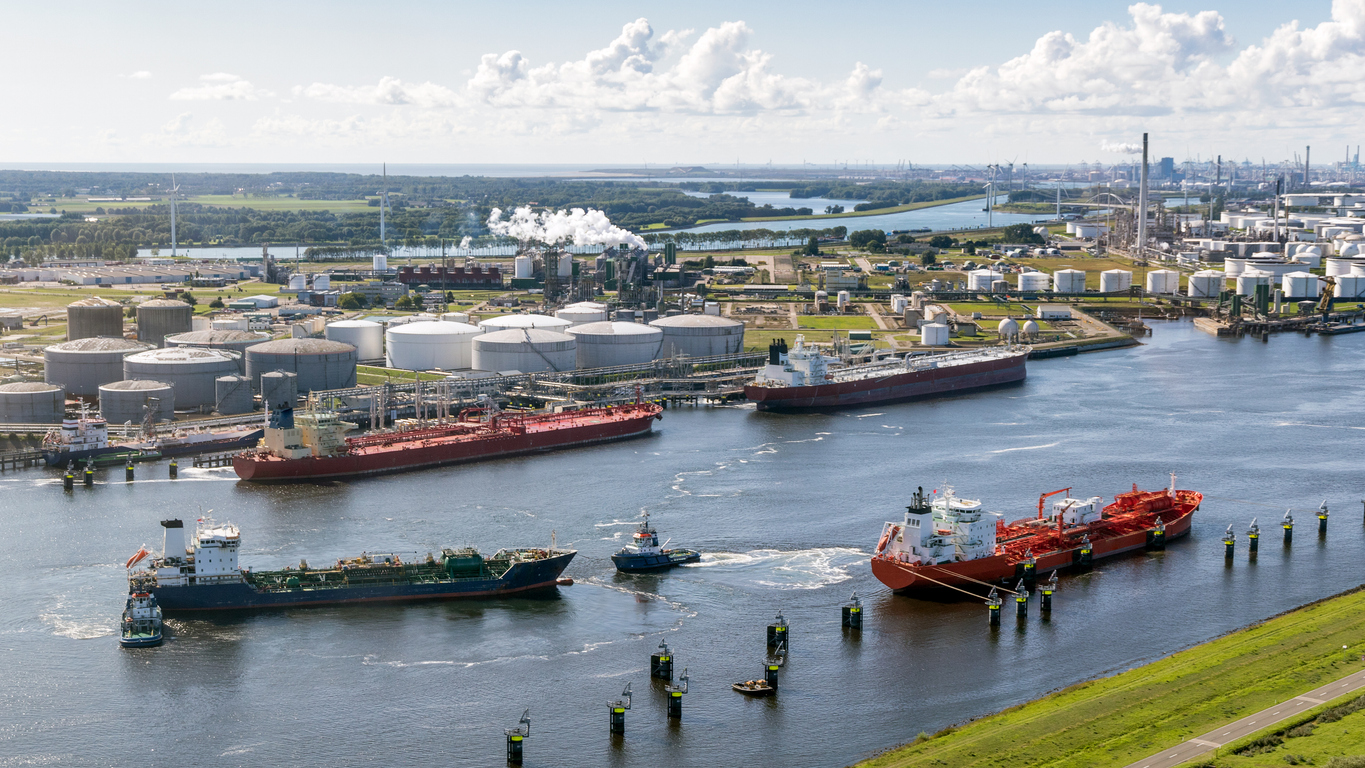
The Port of Rotterdam stretches from Maasvlakte to the city centre of Rotterdam. Open water, industrial facilities, container terminals, vegetation, and urban developments all influence the local wind climate in different ways.
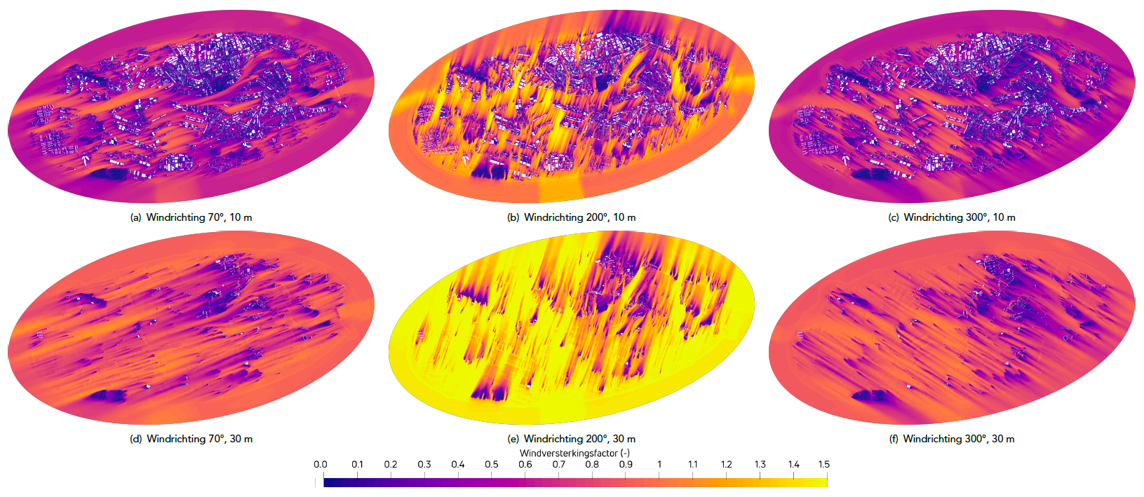
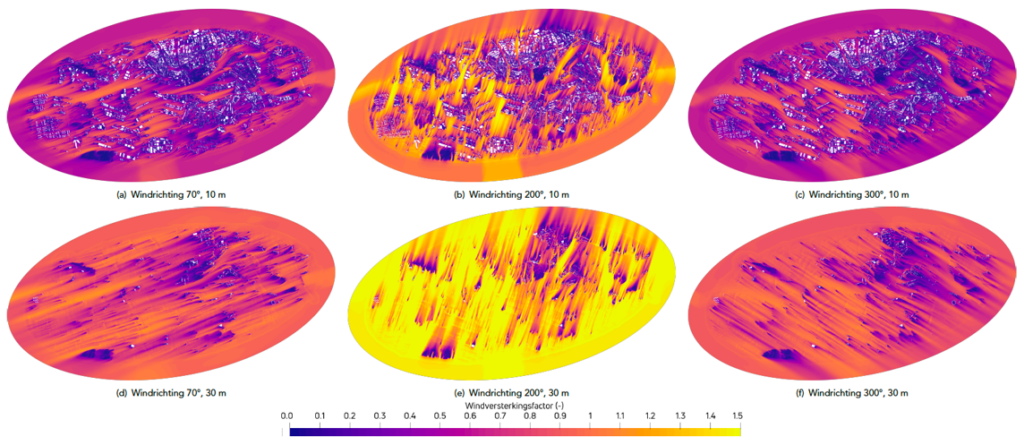
The objective was to determine reliable wind amplification factors for the entire Rotterdam Harbour and Industrial Complex (HIC). These factors make it possible to derive local wind conditions from reference wind measurements at any location within the port area. The scale of the project made this particularly challenging, covering approximately 40 kilometres of highly diverse terrain and infrastructure.
CFD Simulations of the Port of Rotterdam
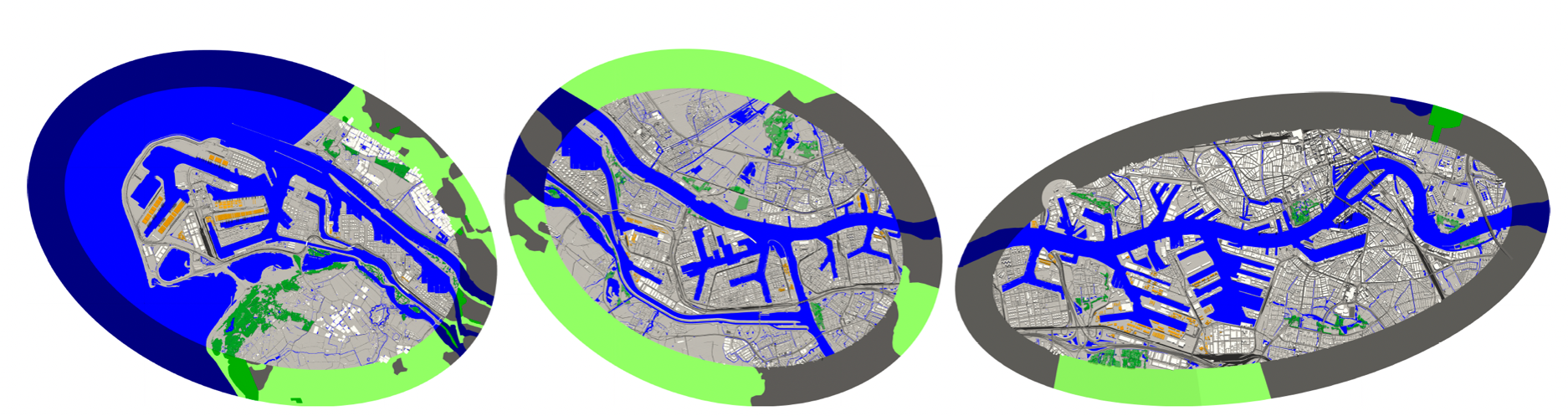
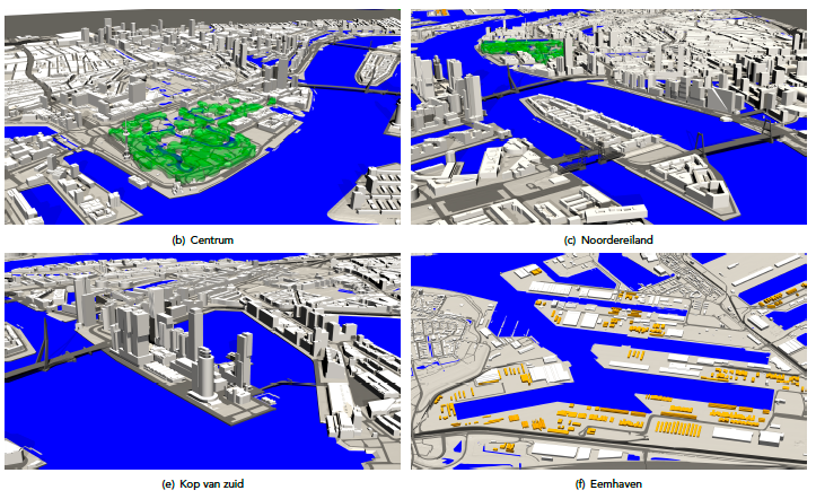
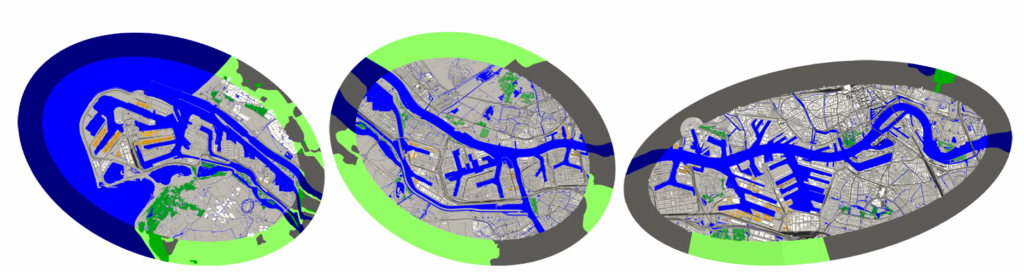
Actiflow developed a detailed 3D model of the entire port area using geographical data, elevation data, and project-specific information. Buildings, container stacks, quay cranes, vegetation, and terrain features were incorporated into the model to accurately represent the complex environment.
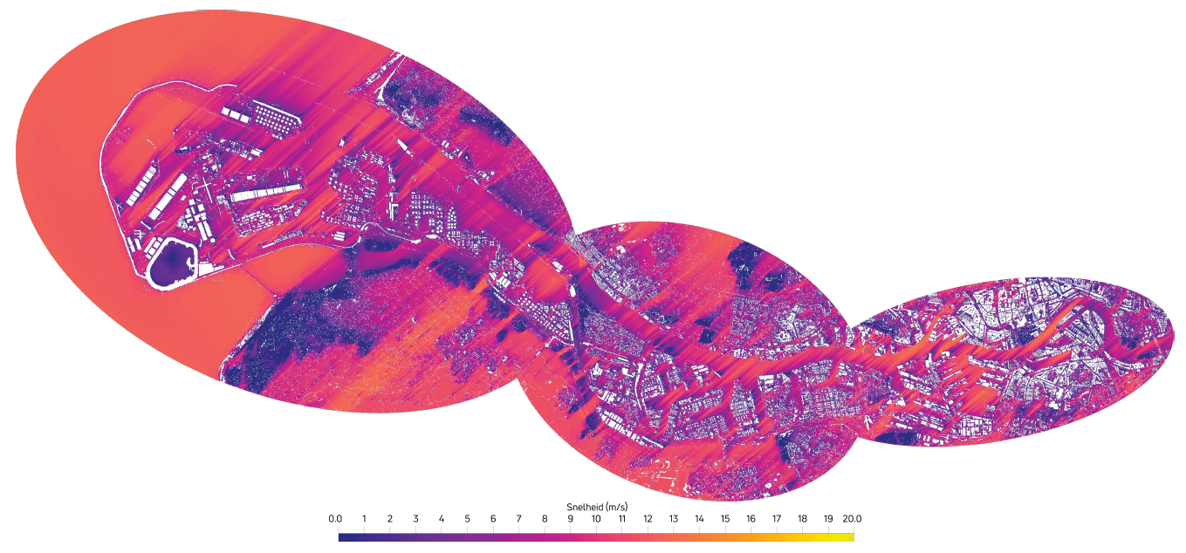
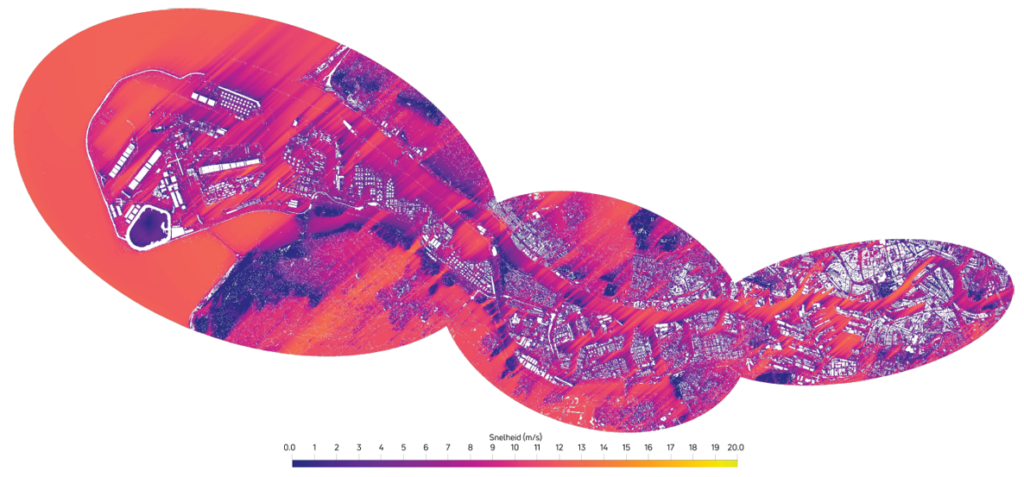
Due to the size of the study area, the port was divided into three regions: Maasvlakte and Europoort, Botlek and Pernis, and Rotterdam city centre. Actiflow then performed 108 CFD simulations covering 36 different wind directions using OpenFOAM.
Results: A Digital Wind Database for Safer Port Operations
The project resulted in a comprehensive database of wind amplification factors covering the entire port area. The analyses provide valuable insights into locations where wind accelerates, where sheltering effects occur, and where significant local wind variations can be expected.
This database enables Port of Rotterdam to translate real-time wind measurements and weather forecasts into accurate, location-specific wind information. As a result, operational decisions at terminals, quays, and berths can be made with greater confidence and safety.
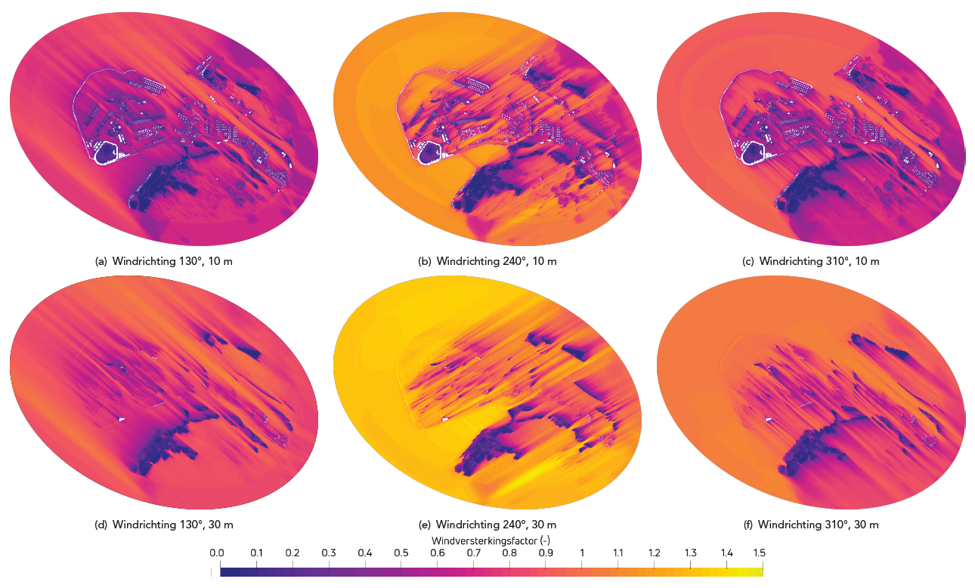
Large-Scale Wind Assessment for Europe’s Largest Seaport
With this project, Actiflow delivered one of its most extensive CFD wind studies to date. By combining advanced flow simulations with up-to-date spatial data, a powerful tool was created to predict and understand wind conditions throughout the Port of Rotterdam. This provides The Port of Rotterdam with reliable wind information to support safe and efficient port operations.
Related Projects

Large scale wind study Rotterdam