Article
CFD: the truth and the tales
Common Misconceptions About CFD
Until the end of the 20th century, Computational Fluid Dynamics (CFD) was primarily used in academic research and by large aerospace companies. At that time, CFD was both expensive and time-consuming. Over the past two decades, however, CFD methods have advanced significantly, while computational power has increased exponentially. As a result, CFD has become more accurate, affordable, and accessible than ever before.
Despite these developments, several misconceptions about CFD still persist. In this article, we address four of the most common ones.
1. CFD Is Not Reliable
Most CFD software is based on the Navier–Stokes equations, which accurately describe fluid flow. These equations are well-established and scientifically validated. The challenge lies not in the equations themselves, but in solving them.
For most practical engineering applications, the Navier–Stokes equations cannot be solved analytically. Instead, they must be simplified and solved numerically using iterative methods. To simulate fluid flow in a specific environment, the analyst must decide which assumptions and simplifications are appropriate for the situation. In addition, suitable turbulence models, boundary conditions, and numerical methods must be selected.
As a result, the quality of a CFD simulation depends heavily on these choices. Problems can arise when inappropriate assumptions or models are selected, often in an attempt to reduce simulation time. In other cases, certain boundary conditions may be unknown, requiring assumptions that introduce additional uncertainty.
When CFD results do not match reality, the cause is usually not the software itself, but incorrect input data, unrealistic assumptions, or an inappropriate modelling approach. The reliability of a CFD study therefore depends largely on the experience of the analyst and the ability to validate simulation results against experimental data.
2. CFD Is Expensive
The cost of a CFD project consists of two main components: computational resources and engineering time.
Computational Resources
To obtain results within a reasonable timeframe, CFD simulations require powerful computing hardware and, in some cases, access to computer clusters. However, computing power has become much more affordable in recent years. For most CFD projects, computational costs represent only a small portion of the total project budget.
Only highly complex or transient simulations typically require significant computing resources.
Engineering Time
Engineering time includes the effort required to:
- Prepare the CAD model
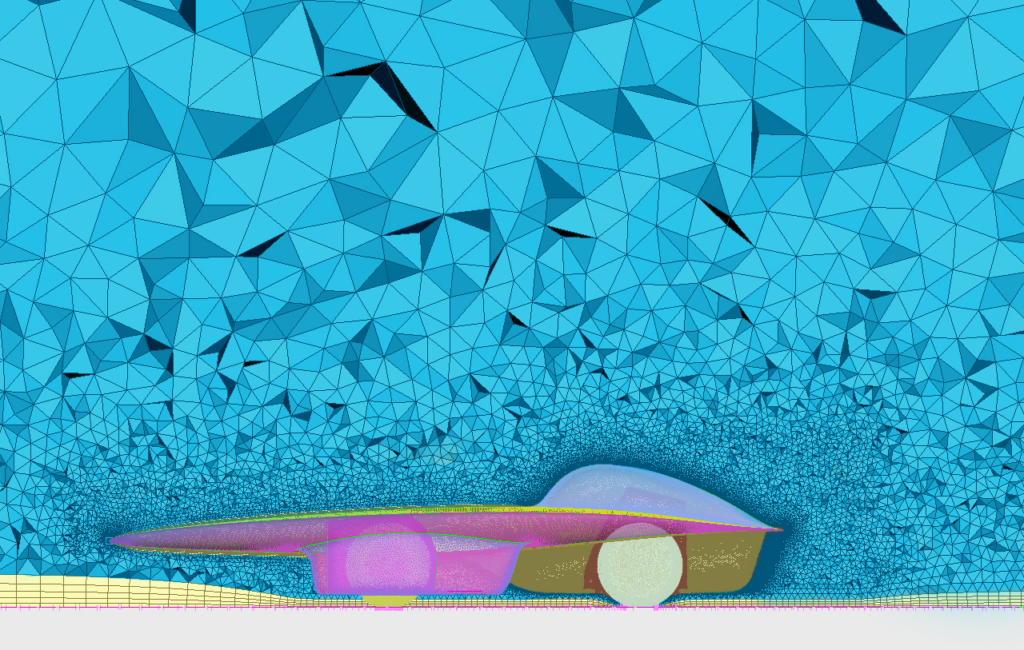
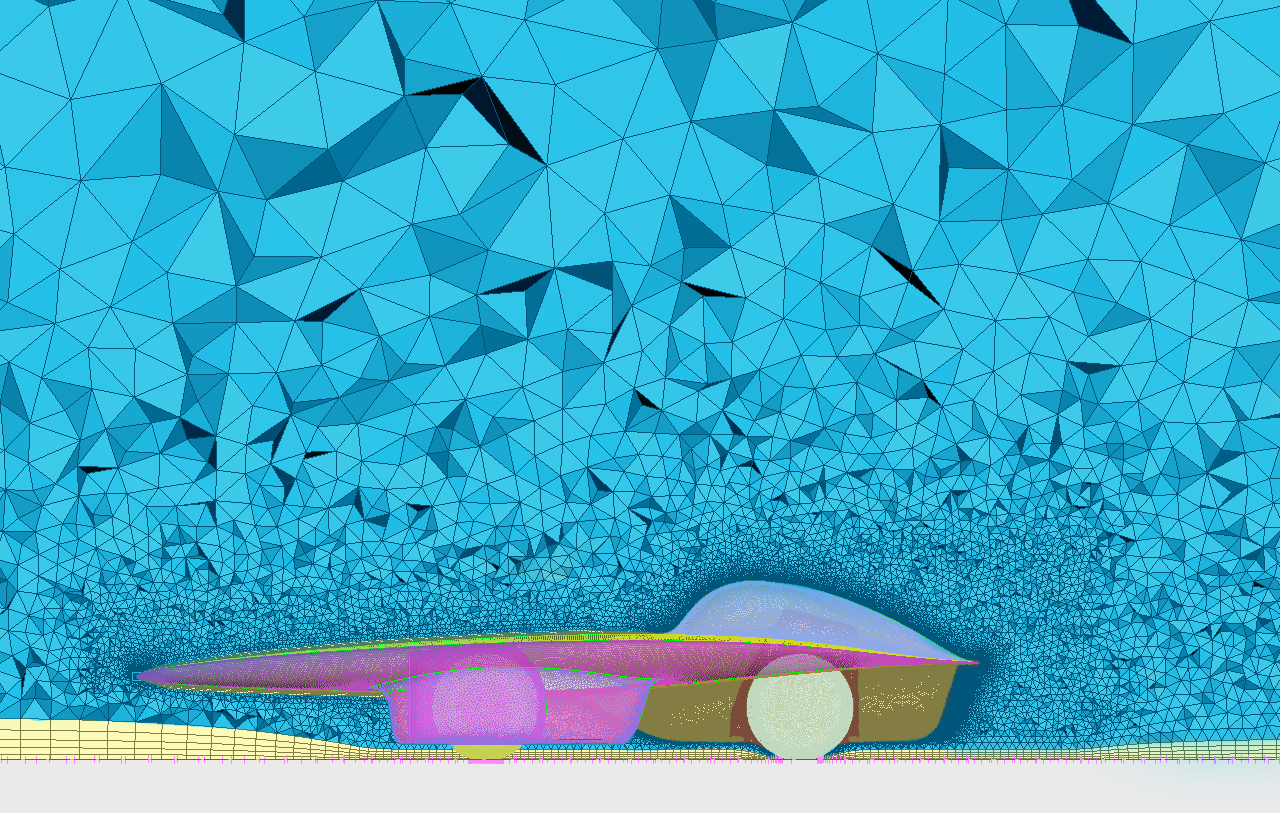
- Generate the computational mesh
- Set up the simulation
- Post-process the results
- Interpret the findings
These activities are essential to ensure that the CFD results are reliable and provide meaningful value to the project.
The cost of an initial CFD study depends strongly on the application. As a guideline, costs typically range from approximately €2,000 for a straightforward 2D analysis to €20,000 or more for a complex transient simulation in industries such as automotive engineering or process technology.
Follow-up studies are generally much more cost-effective. Once the CAD model and computational mesh have been created, design variations or alternative operating conditions can often be evaluated with relatively limited additional effort.
Ultimately, the investment in CFD should always be weighed against the potential savings achieved by reducing or eliminating costly trial-and-error testing.
3. A CFD Study Takes Too Long
CFD simulations can be computationally demanding. However, thanks to continuous improvements in computing technology and the availability of parallel processing on computer clusters, the actual simulation runtime is often limited to only a few days.
In many projects, the time required to prepare the model, define the simulation setup, and analyse the results exceeds the actual calculation time.
The total duration of a CFD project—including CAD preparation, meshing, simulation setup, calculation, and post-processing—typically ranges from two to five weeks, depending on the complexity of the application. Follow-up simulations based on existing models can often be completed within a few days.
4. Physical Measurements Are Always Better Than Simulations
Physical testing is an essential part of many development projects and provides valuable information. However, measurements can be expensive, time-consuming, or sometimes even impossible to perform.
In addition, measurement equipment typically captures flow properties at a limited number of locations. This can make it difficult to obtain a complete understanding of the overall flow field or to identify unexpected flow phenomena.
In most cases, the best approach is a combination of CFD and physical testing. When analysing an existing product, prototype, or building, measurements can reduce uncertainties and serve as validation for the simulation methodology. Once validated, the CFD model can be used to evaluate multiple design alternatives efficiently and cost-effectively.
During the early stages of product or building development, physical measurements are often not yet possible. In these situations, the reliability of CFD results depends largely on the analyst’s experience and the availability of validated reference cases.
CFD or Not? Ask Us for Independent Advice
The purpose of this article is to provide a better understanding of CFD as a tool for visualising and quantifying fluid flow behaviour.
Depending on the specific challenge, CFD may be the most effective solution—or a different approach may be more appropriate. At Actiflow, we provide independent advice and help you determine the best methodology for your project, with or without CFD.